
What Newton Tax Records Show
Newton County property tax records can carry value, relief, rate, charge, payment, and transfer clues. The year attached to a field matters as much as its label. Always read the parcel number and tax year before comparing figures across screens.
| Field | What It Shows | Where |
|---|---|---|
| Assessed value | Annual land and improvement basis used in taxation | Assessor and Auditor system |
| Deductions and credits | Relief applied to the account | Auditor parcel detail |
| Gross tax and balance | Charges, installments, and amount remaining | Auditor and Treasurer tools |
| Payment history | Receipt, effective date, payer, method, and amount | Auditor detail and MuniciPay |
| Taxing district and rate | Units and rate tied to the parcel | Auditor rate tables |
Function divides the work behind Newton County property tax records. The Assessor determines assessment data. The Auditor maintains the tax list with deductions, rates, and calculations. The Treasurer bills, collects, and handles delinquency and tax sales. A sale price records a transaction. It is not the same number as an assessed value or a current balance.
Newton Tax Offices Divide Work
Three Newton County offices split the tax workload. The Newton County Assessor identifies property, develops assessments, conducts sales and ratio work, and supports appeals. The Auditor maintains the public parcel and tax system. The Treasurer collects real, personal, and mobile-home taxes along with annual tax-sale duties.
All three rely on the parcel number, yet one office cannot certify another's work. Ask the Assessor about value. Ask the Auditor about deductions or tax-list fields. Ask the Treasurer about payment, delinquency, or sale status. Their offices sit in the courthouse at 201 N 3rd Street in Kentland. Weekday hours run 8 a.m. to 4 p.m.
Newton Tax Detail Fields
The Auditor detail can show assessment year, deductions, gross tax, unfunded and local income-tax credits, charges, balances, spring and fall installments, and a December settlement snapshot. Payment rows can identify receipt, payment ID, effective date, payer, method, and amount.
A sample 2025 parcel showed an $18,000 assessment, a $1,080 deduction, $264 gross tax, and a $132 balance, plus a later cash payment. Those are sample fields and dated figures. They are not a current balance for another parcel. Always open the correct APN and pay year.
Look Up Newton Tax Bills
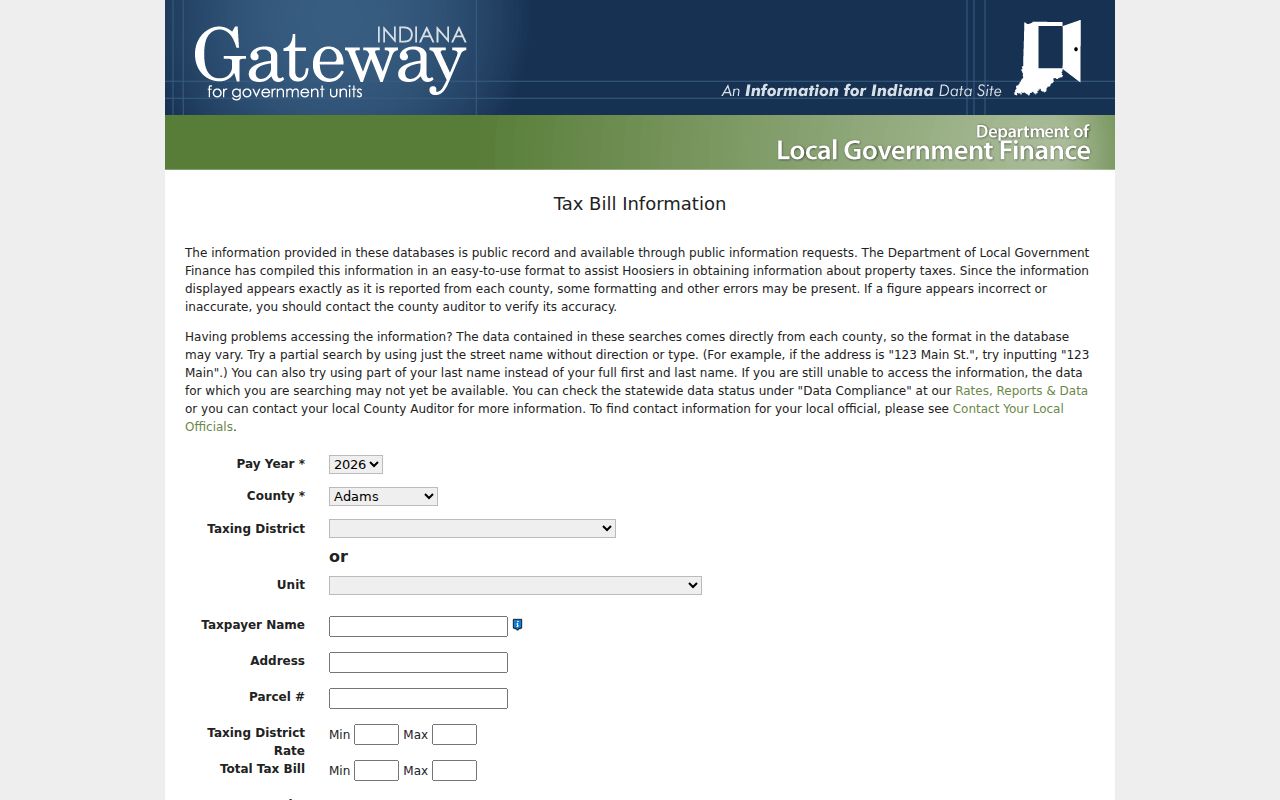
Start with the Auditor list when only an address, owner, or parcel number is known. From there, use the state Gateway or the Newton Treasurer-linked payment site for the bill or payment stage. Keep the pay year visible throughout. An old balance and a current installment answer different questions.
- Find the parcel through the Auditor by address, owner, or full APN.
- Open the Indiana Gateway tax-bill lookup or Newton MuniciPay search.
- Confirm the tax year, installments, payments, deductions, and remaining balance.
- Check Treasurer notices and the tax-sale source if a warning or delinquency appears.
- Assessed value
- The value used as the starting basis for property taxation.
- Tax rate or levy
- The rate applied within the parcel's taxing district.
- Homestead deduction
- Qualified relief reflected on an eligible property account.
- Tax lien
- A legal claim associated with unpaid property tax.
The search controls and pay-year route are visible through the official Gateway tax-bill lookup.
Newton Payment Dates and Fees
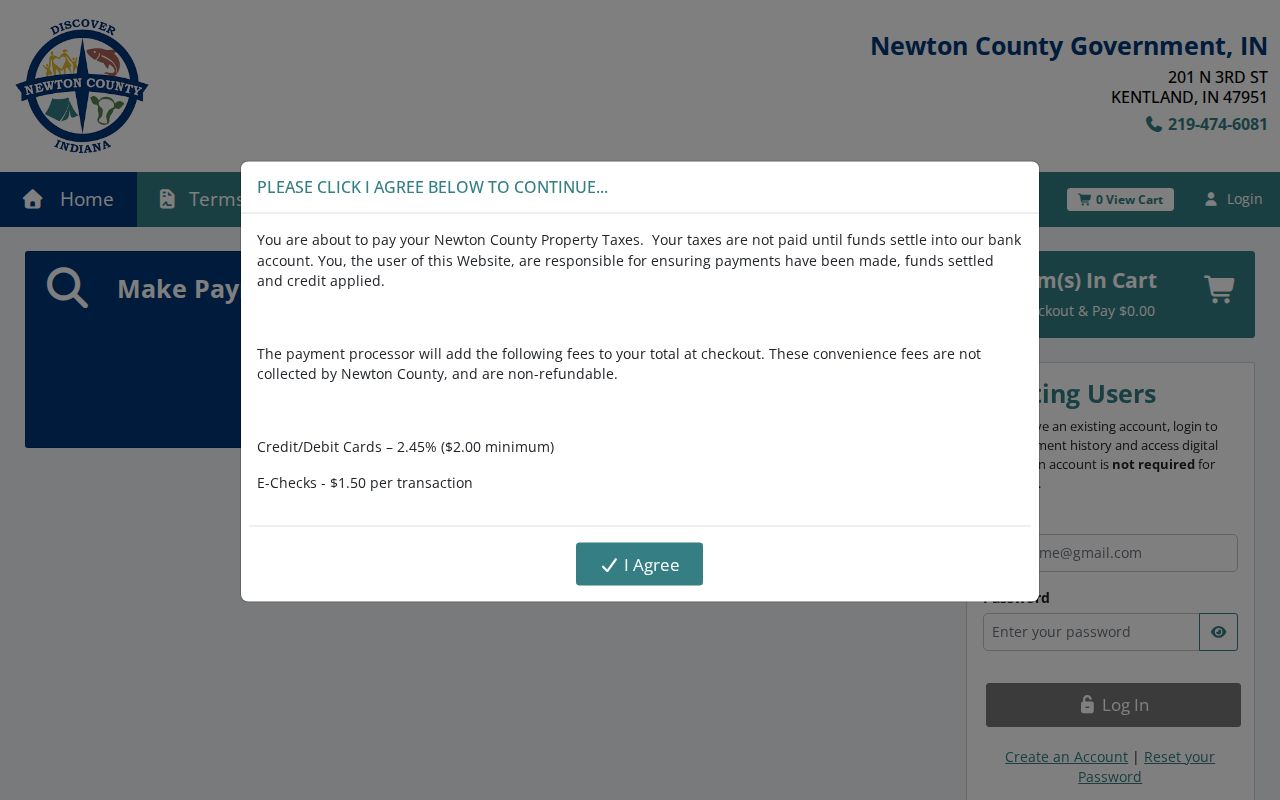
Indiana property tax is commonly billed in spring and fall installments. Newton Treasurer material lists November 10 as the 2026 fall due date. Current county payment material shows a card charge of 2.45 percent with a $2 minimum. An e-check carries a $1.50 fee. Fees and dates can change, so confirm both on the live payment screen.
The Auditor detail may show historical payment data, while MuniciPay serves as the payment gateway. A receipt row alone does not prove every year and parcel is clear. Check the parcel number, tax year, payment effective date, and current balance. Also review any warning before treating the account as paid.
The county's current payment route can be checked at Newton MuniciPay.
Newton Deductions Need Verification
Deduction and credit fields reduce or adjust the tax calculation when statutory requirements are met. Auditor forms cover homestead and other deductions. The public statistics can group records by flags such as homestead, bankruptcy, TIF, and tax-sale eligibility.
A homestead flag is an administrative tax signal. It is not conclusive proof that a named person currently occupies the land. Verify the deduction year and status with the Auditor. This matters especially after a transfer, parcel split, death, trust change, or mailing-address change. Missing relief should be raised through the Auditor's current form and deadline process.
Note: Owner, deeded owner, payer, and homestead fields can describe different roles and should not be treated as synonyms.
Newton Delinquency and Tax Sale
The Treasurer publishes or links tax-sale and delinquency material. The Auditor system carries warning and balance data. For sale properties, the SRI Newton County interface is the route to browse listings.
A warning, list entry, certificate, redemption, and tax deed are different stages. Check the current amount with the Treasurer. Confirm the deadline there too, rather than relying on a saved list. Search the Recorder for a tax deed or later release when the land-record effect matters. A property search cannot supply legal advice on redemption rights.
Newton's 2026 Reassessment Cycle
Indiana's statewide cyclical reassessment begins July 1, 2026. Physical review covers about 25 percent of parcels per year. That pace continues over the 2026 through 2030 cycle. Newton owners may see inspection and data-review activity on a rotating schedule. Annual adjustment and ratio work continue throughout.
The DLGF reassessment overview explains the statewide program. Its schedule does not mean every Newton parcel changes by the same percentage. Property class, verified data, sales evidence, neighborhood grouping, and local assessment work can each produce different results.
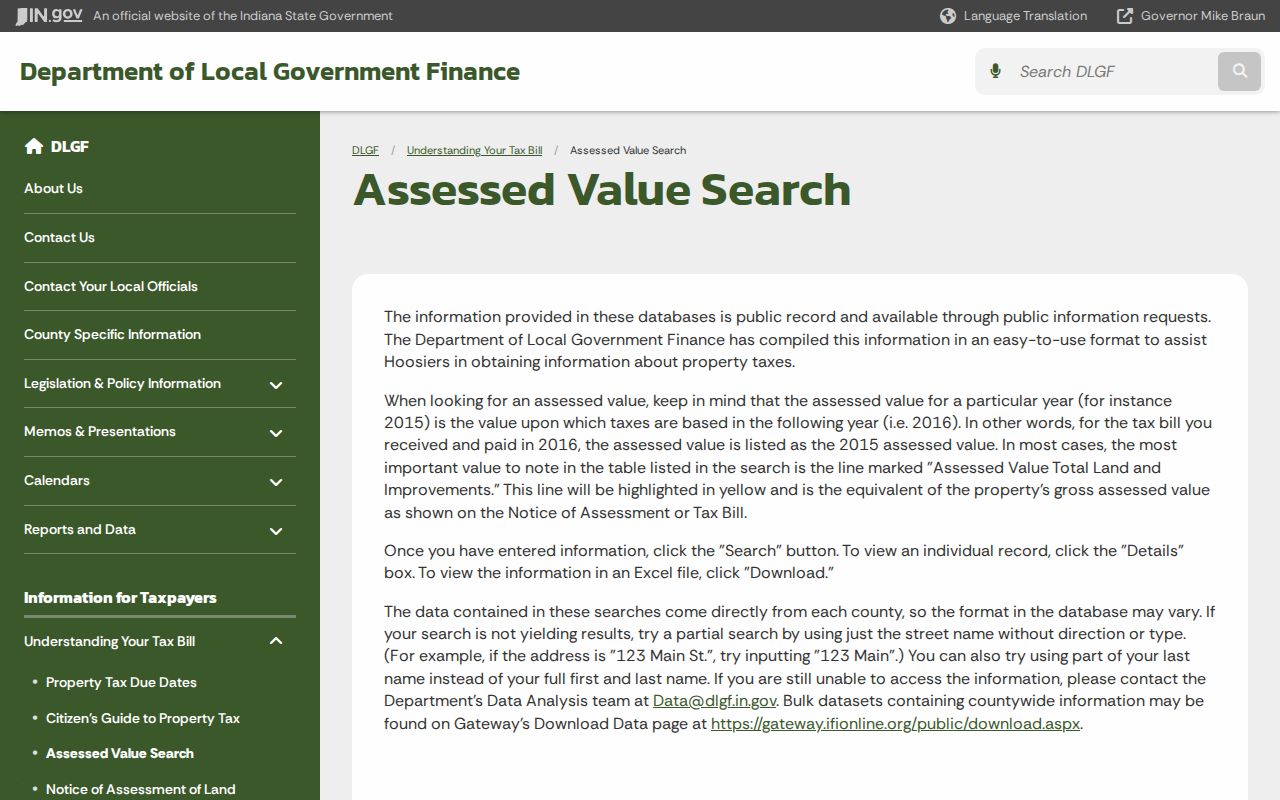
State assessment access is illustrated at the DLGF assessed-value search.
Appeal a Newton Assessment
Indiana lets a property owner challenge an assessment by written notice. The notice goes to the assessing official, usually on State Form 130. The DLGF appeal instructions set the filing deadline at June 15 of the assessment year. That deadline can shift. It moves to 45 days after an assessment notice is issued if that date falls later. Always confirm the date printed on the notice itself.
A strong appeal names the parcel and the disputed value. It states the correction you want and backs it with evidence tied to the valuation date. Property characteristics, photos, a qualified appraisal, or comparable sales all work well. Proof of an objective error counts too. Appeals can move through local review with the Property Tax Assessment Board of Appeals.
Appeal window. File by June 15 or within 45 days of the assessment notice, whichever is later. Use the date printed on the current notice.
The portal labels its figures "Not for Official Use," so confirm everything with the office. Call the Assessor at (219) 474-6081 to check an assessment record or ask where an appeal stands. The Treasurer handles payment questions while an appeal is pending.